
Note: This is an opinion piece by A. Ganesan based on his analysis of past Candidates tournaments.

Some Candidates statistics
Since 2013, FIDE has used the ‘eight good men’ format for selecting the world championship challenger – an 8-player double round robin Candidates tournament. This month’s event in Cyprus promises to be an exciting display of top-quality chess and many have already made predictions forecasting the winner. Instead, I have looked at some statistics of previous editions, summarized in the following table. For good measure, I also included the 2005 and 2007 world championships, which were held according to the same 8-man format.
Player | Year | Rank/8 | 1st win | 1st loss | Halfway | Leader? | Final score | 2nd place |
Gukesh | 2024 | 6 | 2 | 7 | +1 | Shared 2nd | +4 | +3 |
Nepomniachtchi | 2022 | 4 | 1 | - | +4 | Yes | +5 | +2 |
Nepomniachtchi | 2020 | 4 | 1 | 7 | +2 | Shared 1st | +3 | +2 |
Caruana | 2018 | 5 | 1 | 12 | +3 | Yes | +4 | +2 |
Karjakin | 2016 | 7 | 2 | 11 | +2 | Yes | +3 | +1 |
Anand | 2014 | 4 | 1 | - | +2 | Yes | +3 | +1 |
Carlsen | 2013 | 1 | 3 | 12 | +3 | Shared 1st | +3 | +3 |
Anand | 2007 | 1 | 2 | - | +3 | Yes | +4 | +2 |
Topalov | 2005 | 1= | 1 | - | +6 | Yes | +6 | +3 |

Conclusion 1: The top rating doesn’t guarantee success
Veselin Topalov and V. Anand were the rating favourites and went on to win the World Championship in 2005 and 2007. However, Magnus Carlsen is the only one who won the Candidates as the top ranked (and that was close, coming down to a tiebreak against Vladimir Kramnik). In the last decade, the winner was halfway down the list or even near the bottom (D. Gukesh, Sergey Karjakin). The Candidates reward the player who is ambitious and in good form, while the highest rated might feel additional pressure from the expectations.

Conclusion 2: Win early and often
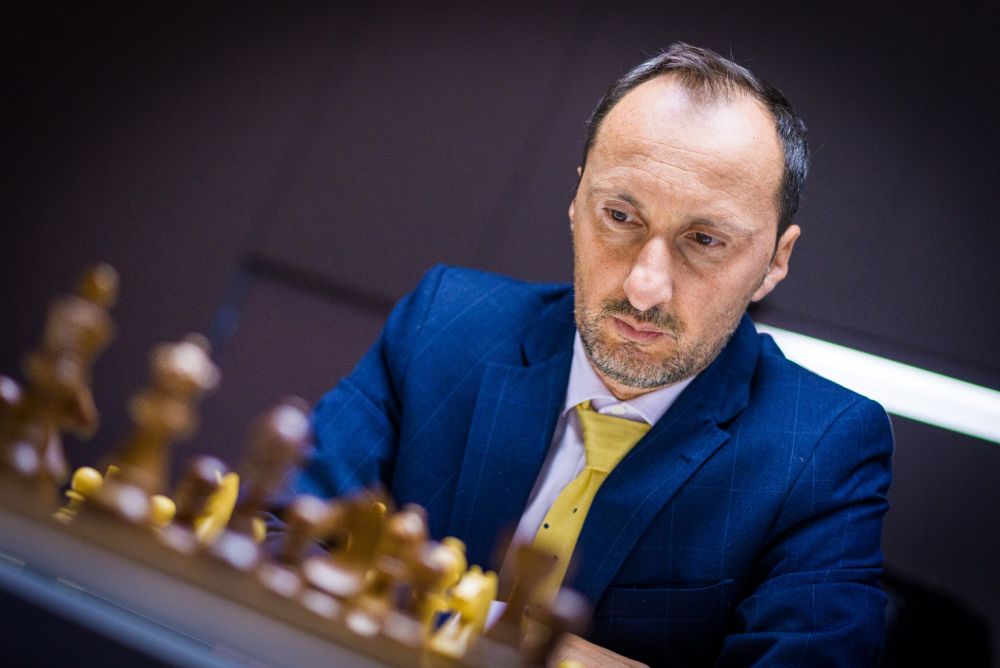
There are no easy opponents in the Candidates, and a good start is essential to build momentum. The eventual winners scored their first victory in round 1 or round 2, with only one exception, Carlsen winning in round 3. In the extreme case, Topalov raced to an incredible six wins and one draw in the first half of the 2005 world championship. This was such a commanding lead that nobody else could catch up. He drew every game in the second half and still finished 1.5 points ahead of Anand.
Conclusion 2: Maintain the momentum
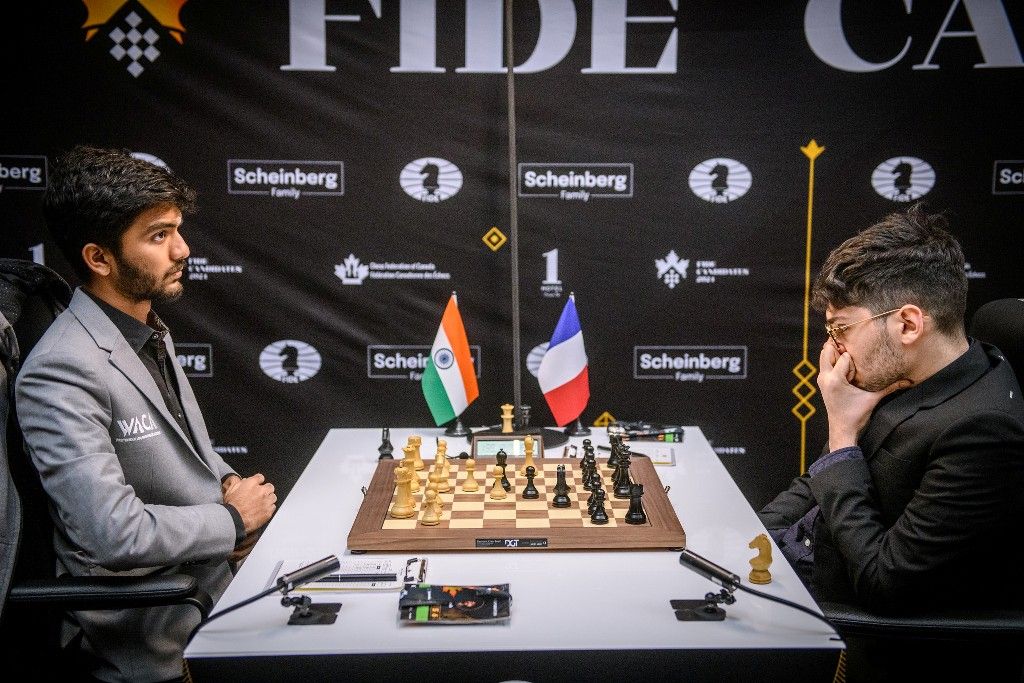
While winning early is important, it is equally crucial not to have setbacks due to defeats. The earliest that a winner suffered a loss was not until round 7, and some remained unbeaten throughout! By the halfway point, every eventual winner had a score of at least +2 and was in first place. The sole exception is Gukesh, who still shared second place at +1. Nobody who was below second midway or had an equal or negative score has ever won the tournament.
Conclusion 3: +4 is the goal
There were exceptional performances by Topalov in 2005 (+6) and Ian Nepomniachtchi in 2022 (+5). Apart from that, +4 was enough to clinch sole first place and in fact +3 was sufficient in 2020, 2016, 2014 and 2013. The winning margin has often been a full point or more, and only once did a tiebreak have to be applied (Carlsen and Kramnik in 2013). Winning two games in the first half and adding two more in the second half is a good recipe for success.
Conclusion 4: Wait until round 2
Fabiano Caruana is clearly the highest-rated active player in the world and the most experienced candidate. He has already won once; can he do it again? In the modern era, only Anand and Nepomniachtchi have achieved this feat. Or will the winner come from Russia or India, powerhouses with three previous victories each and represented by R. Praggnanandhaa and Andrey Esipenko this time? Meanwhile, based on the pairings, one to watch is the young Uzbek Javokhir Sindarov. Not only has he had a fine year, but he has White in the first two rounds against the lowest rated Matthias Blübaum and Esipenko. As history predicts, it is highly likely the challenger will be a player who wins in either round 1 or round 2 and Sindarov has a good chance to make his mark.

Who are you rooting for in the FIDE Candidates Tournament 2026? Take a look at the pairings here.
About the author

A. Ganesan is a Malaysian of Tamil descent and a university professor of chemistry in the United Kingdom. Chess is one of his hobbies. He plays in the local chess league and has an English Chess Federation rating of around 2100. He also plays online on FIDE Arena, where he holds the International Master (IM) title.


