

How did Cyprus and Cap St. Georges become the venue for FIDE Candidates 2026?
We speak to the CEO of FIDE Emil Sutovsky on how the FIDE Candidates tournament was put together. How were the funds raised and how was the venue Cap St. Georges in Cyprus decided. As we speak on this subject, we get an understanding of what is needed to organize an event of this magnitude. Emil also shares his thoughts on Koneru Humpy pulling out of the event, and why it was logistically not possible to shift the venue.

Sagar Shah (SS): Emil, this is the venue for the FIDE Candidates, and I was curious to know how FIDE decided to make this the venue. Could you take us through the process of how it began, how Cyprus became the venue, and then this location, Cap St. Georges?
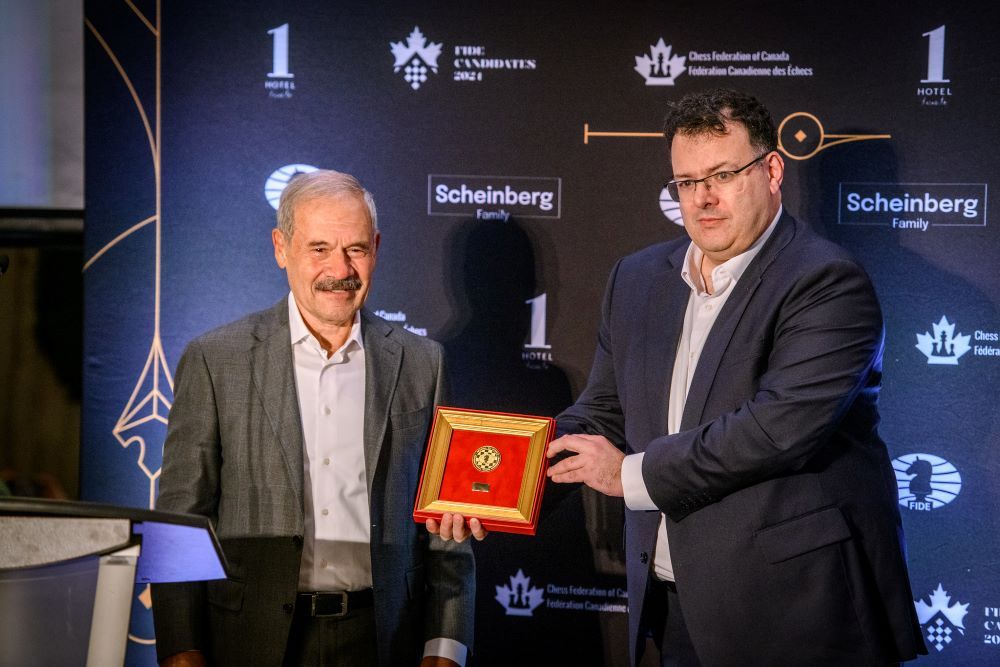
Emil Sutovsky (ES): Well, it's never easy to explain it by one decision or by one factor. Actually, when you plan for hosting the event at some particular location, you have to consider so many factors. So when we considered who would be the sponsors and hosts for the events, of course we considered several options. We had 2024 in Toronto and that was a successful event. As you remember, it was also sponsored by the Scheinberg family, and already back then Isai confirmed his willingness to support for the 2026 edition and that was a very good start. At the same time, we thought of improving the event in every aspect. We raised prize funds significantly. It went from 700,000 to 1 million. We tried to think of how we could improve on literally every side of it, like commentary, broadcast, and location. In Toronto, it was a good city for hosting it and there were a lot of spectators, but we were not quite happy with the general arrangement. It's very difficult in a big city to have something very good for 3 weeks plus.
SS: It's also expensive to do it in a big city, right?
ES: It is. This place is also very expensive as you could see. But even the availability is an issue and expenses as well obviously. Logistics in big places are often something that we have to accept some trade-offs. Typically, like in London during world rapid teams 2025, it's great to have it in London, so many teams came, so great opportunity, but then the venue itself was not spectacular. There are many trade-offs in big cities. Even in Madrid in 2022 when we played in a very great place in some palace, you remember. But the location for hotels, we had to split players between two hotels because there was not enough rooms with big rooms like here.

Because once again it's not just typical rooms. For all the players here, I want people to know all 16 players are in suites. They have two-room apartments where they can simply sleep in the bedroom and another one is to prepare for the games when the coaches come.
We obviously need to take these things into consideration and the entire budget kept increasing. We realized that Isai's commitment, although it is very important and I would say critical, would need to be also supported by another major sponsor. I think it was a very good decision to combine two of our main sponsors, Freedom and the Scheinberg family, to join forces to co-sponsor the event together. Both of them were receptive to the idea and obviously they knew about each other and I had to be a connecting point.
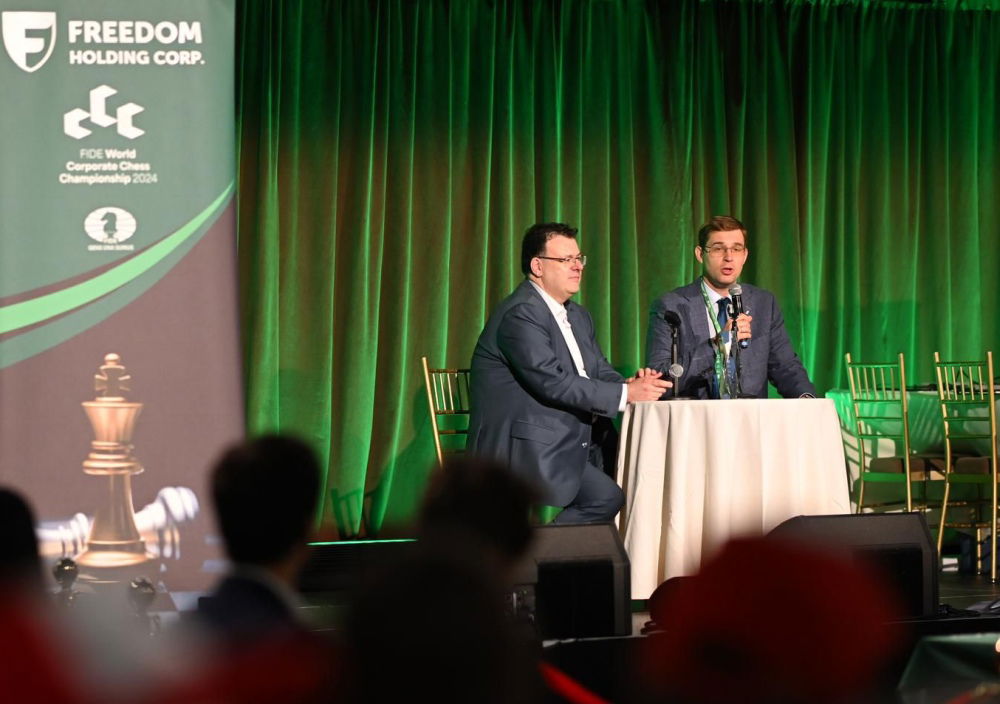
It was like a bit of shuttle diplomacy, go there, go here to listen to everyone's thoughts. Then we had to determine where the location should be because for both of them there are some countries where they would have preferred. It's not like they're saying it should be here, but I had a list of their preferences and that it should be combined with our interest and how to promote it. And the third factor came in when I had the idea of Cyprus because that's where the European headquarters of Freedom are hosted here. You would be surprised how big they are here. There are hundreds of Freedom workers here (around 600) and they have a very beautiful headquarters in Limassol.

And then I spoke to Isai and managed to have his confirmation on this one and he immediately asked, "yes, but Cyprus, do they have any proper location to have such a big event?" Cyprus is not a big country; they are famous for their tourism and industry, but you wouldn't want just some typical chain hotel to host it because, well, it is not quite appropriate and also the playing venue would be an issue. And then I got in touch with Roman Dubov who is a sport entrepreneur and who is an owner of football club Pafos FC and who was very much engaged in chess activities as a junior in his youth. He reached the first category player and is still very passionate about the game. I told him about the idea and he said, "okay, I have the best hotel in the entire country that would ideally suit all what you need, but you would just need to convince the hotel owner to host it." And so then we met with George.


SS: Isn't Roman Dubov also part of Total Chess? Is he the one?
ES: No, no, no. I have to dispel this confusion. Roman Dubov has his own company which is called Total Sports Investment. It has nothing to do with Total Chess or Norwegian Chess. It's another case of Vladimir Kramnik being not accurate with some of his clips. Actually, the name is Total, yes, but it has nothing to do; his company exists for 10 or 15 years. So the point being that Roman lives in London for 25 yearsor so. He works in the sport industry or business for all these years. He was a stakeholder in Tottenham Hotspur in football. He owned some sort of race cars world championships. He was an owner of leaders in sports summit conference. And so for that matter, we thought that getting the Candidates to Cap St. Georges could be a good idea because that would allow to host it not only in a nice hotel, because there are many nice hotels in Cyprus, but in a unique environment where players can play, enjoy the surroundings, have a lot of places to recharge.
For covering the event also we will get nice pictures from here because it's amazing views. Cap St. George was what was important; they were also ready to be partners and not just partners for the sake of it. Sometimes you just come to a hotel and you just book some number of rooms and that's it. But they are real partners for the event. They contribute towards this happening and the team of the hotel was very professional and were very engaged from the beginning. When I met George and his CFO Christos, we already felt that it would be a right choice.

SS: What goes into sort of saying like this is the right choice? Because location-wise it's amazing, they have great rooms. Is there something else that goes into it like the management of the hotel, how cooperative they are and so on?
ES: It's on several levels. You want to feel the hosting hotel as a partner and not just as someone with whom you would book a certain number of nights. They expressed the interest to be real partners for the tournament and they also from the very beginning established a team to work on it. Although our events team is very professional, it's always important that the host team or LOC (Local Organizing committee) is proactive and engaged and we saw it from day one even before we agreed on anything. So they were very motivated also to host it. They were looking to it as an opportunity to contribute to something which they respect, chess.

George himself, the owner of the hotel, basically all you see around is something that he planned and built himself. That's amazing. He runs this place for 20 odd years and it was just the land and now you see. It's a resort, it's a hotel, it's a lot of sport playgrounds. They have here even a kindergarten school and now they're building some sort of a hospital here. So they really are expanding.
Now talking about the comfort for players, obviously it's important that it's a long tournament. It's three weeks and you need players to recharge, to have an opportunity to do sports, just to walk after the game, to jog, to have nice food. Immediately they asked us what we need to do from the food point of view. We told them, "look, it's a long period of time, we need various sorts of food. We have several Indian players so we need a lot of food for vegetarians and so on," and they were very accommodative in this regard. They are real partners who promote this event and I must say that not only they didn't disappoint, but they over-delivered on their promise and we are very happy with this cooperation. Of course the place is really unique. I've been to many places, to resort places as well, but this one is special. This territory is huge and it's well cared for and there is a lot of activities you can do. On the next free day, we will come up with something more. First time I arrived here, I was immediately thrilled by the atmosphere. I had gone to the ceremony of olive oil pressing because it was the first olive oil season. They had this one with a lot of bread loaves and olive and some meat and some wine. We felt immediately that it could be much more than just a hosting partner and indeed it happened.

Of course, matching all this is not easy, but again we had three inspections here. I've been to two, but my colleagues also came for a separate one to plan everything—the venue, the food, the rooms, everything was taken care of. The playing room, you need to measure, then to design how it would look, then to try and plan where the players would go in, go out, how the anti-cheating security zone would be, how the spectators come in. And you see there are a lot of spectators here, less than in Toronto, but still quite a lot. Every round we have more than 100 people coming.

The fan zones are actually quite impressive and we have an activity every day. It is simul games, some lectures, some special Q&A sessions and so on. Literally every day we have it. We had Vishy there, Boris Gelfand is going to come. It is important for us that the event becomes not only, "we hosted candidates, thank you, goodbye." It should leave some sort of an aftertaste that kids are coming and getting the inspiration.
We also wanted to ensure that the players are comfortable in all respects, because players at this top level, if something even minor thing is disturbing, you would hear about it or read about it in Twitter immediately. I think players had no reasons to complain so far and many of them came to me and praised the event's organization and I'm really proud of pulling it together with my team.
SS: Putting such an event together if it is not a secret, could it be told - how much does it cost FIDE?
ES: For candidates, you can always do it like in a reasonable way or in a grand way, but let's say the budget we see as a minimal one for the Candidates is 3 million USD, and then whatever comes on top allows you to invite more guests, to have better programs, to invest in broadcast and so on. But 3 mil is a minimum figure.
SS: To do an event of this stature, the first thing that you as FIDE think about is how to get a sponsor on board, then the location, then the actual venue? Is it dependent that the location and the venue both have to be found or you are like "okay, Cyprus come what may and then I will look at the hotel"? How does it work in your head?
ES: No, first you need sponsors. First you need to know that you have this money secured at least in larger part. Of course it helps when you have already part of the money secured. Let's say I'm grateful to Scheinberg because we knew that we have part of the money secured and it could come to our long-standing partner Freedom who is doing so much for chess in many directions. Not only the top events; you know about this program for chess in Asia where they send teachers and do tournaments in 12 countries. Mr. Turlov supported it and it was a very strong beginning when you have almost all the funds necessary already in place. That helps and indeed after you secure a large part of the budget required, it's already easier. Then you can come; that's why I said it's shuttle diplomacy. This term was very popular in the 1970s when you want to broker a peace deal between two parties. You can't immediately do it; you need to go to this one and sometime you need to go to a third party to explain what would be the perks.
You have to connect the dots and it takes a lot of networking, but thankfully our team - Dvorkovich, myself and so on - we already are running things for almost 8 years, so this network obviously helps because you know people. You know that we have an idea with Cyprus, so we can call the president of Cyprus Chess Federation, Mr. Criton Tornaritis, share with him the idea to get his support of hosting the event in his country, to consider together with him what we can do for the local chess community because it must be reciprocal. We contribute to local kids. Here today we will have two national champions who happen to be teenagers. The girl is 12 years old and she's national champion and the boy is 18. And then you connect another by bringing Gelfand and others, you'll benefit from all these sort of things. So it is always many dots to connect but at the same time it is something that allows you to do so much for basically everyone - for professional players, for fans following online, for local chess community and for the media.


SS: The FIDE Candidates is one of the events that everyone looks forward to as there is so much at stake. So then that makes it very exciting.
ES: Indeed and we treat it accordingly. We put a lot of effort into that. You know this anti-cheating discussion which Hikaru raised. We put a lot of thought into that when in November we started discussing the budget. I knew that the budget I achieved by that point is sufficient to invest into new additional layers of security and I connected with our team with Andy Howie, who is the chief of FIDE Fair Play, and asked him to review several options in securing the event to the maximum level with an emphasis that players should not feel any additional pressure but they should be protected in a better way. We know the technology advanced so we have to invest into that and I think it was well executed.

Candidates is a brand; it's only second to the world championship match. Having it at a location which would showcase how chess is a prestigious sport is important. The money we have in chess is largely due to our status and the prestige chess gets and enjoys justly, and not the sheer eyeballs. It just doesn't work in chess. If the economy of chess would be based solely on the eyeballs, we wouldn't have as high prize funds as we have now. It is much more of a premium product and Candidates is premium of the premium. People realize that and that allows us constantly to find support, be it from the companies like Freedom, the Scheinberg family who is more of a donor rather than a sponsor because they love chess, and governments because they see how it can be important for their community. I'm really thankful to Cap St. George. It's amazing to have such a partner and it's a pleasure because when you know that you work towards something and then this is followed by entire chess world, then it was not in vain.
SS: This event actually had something that is not very common - a war broke out during the preparations. Were there any thoughts at any point that you need to change the location?
ES: Well, it's not the first time that we have to exhibit crisis management. Our work throughout these seven-eight years has been under various challenges like COVID. People are either unhappy that you are too cautious or they are unhappy that you are too bold. You just have to operate on a balance of risks and probabilities and the real situation. Many people today are impacted by headlines. Somebody tagged in Twitter that Cyprus is under attack, so the entire world could think that it's so, but our task here is to have the real picture. Of course, we spoke to the government. We are in constant touch. A lot of work has been done with the hotel to make sure, and this ability to measure risks and to take correct steps is something that I think we can be pretty proud of. Some people may be unhappy, but I don't think we have been wrong throughout this time. Remember the 2022 Olympiad was supposed to be in Moscow and then Russia invaded Ukraine and then we had to reschedule very quickly. This is always a question of assessing the situation in the best possible way.
As for this particular situation with Cyprus, I would think that the whole narrative was somewhat exaggerated because Cyprus has no part in this war and Cyprus was not attacked. At the beginning of the war, there was some drone sent to a British air base. It's hundreds of miles away from here and it's not like a missiles attack. We have to take things in proportion because otherwise we need to say okay, if there was a rocket aimed at Diego Garcia and it is capable to fly 4,000 kilometers, so we cannot stage any event in the radius of that and we cannot go to Greece and no to other European country.
We are not living in a vacuum; we are living in a very challenging world and there are many risks in any other place. The question is to assess these risks properly and to be ready to act if the situation is changing. I always claim to be ready to adjust when needed. Sometimes it may seem like we don't have a clear policy, but my take is that if we are able to adjust to the challenges, that's the best policy. In today's world, it's simply impossible to plan something for many years ahead and then execute. AI is changing the world, Trump is changing the geopolitical map and so on. We are a small chess world, we have to adapt and we have to be strong enough, smart enough and dynamic enough to respond to all these challenges.
SS: This war situation did have a concrete impact on the event in that Humpy pulled out. Now that you think about it, could something have been done?
ES: Nothing could have changed. I spoke to Humpy herself when she raised concern. We are old-time friends, she played in my team, and I'm full of admiration - Humpy is a legend. But I think her call here was her right. We are not going to find her or take her under any sanctions because quitting the tournament was not based just on nothing, it was based on some real concerns. But I think it was just taken out of proportion. I don't like this narrative where people in comments come, "yes of course safety is first." Why is safety first? Maybe freedom is first in your life. Maybe your dreams is first in your life. Maybe something that drives you is first in your life.
If safety is first, lock yourself at home. I don't just accept that safety first is a priority because it's not clear what is first in this life. In this case, I think the concerns were not in correspondence with the reality. If we speak about the likelihood to be damaged by something, it comes from so many possibilities. The likelihood of a drone arriving 3 or 4 weeks before you take a decision - and it's a drone, once again, not like ballistic rockets that attacked here. Everybody is living a normal life here.
We also took precautions; all the players were informed about what kind of precautions we took. You cannot postpone such an event because you just can't remove it without any good reason. I feel sorry for her decision, but if we were taking a decision to shift every time when a player exhibits even a motivated concern about this or that matter, then we wouldn't be able to ever pull big events one after another. No other player exhibited the concern. We have no cancellation not only from players but also from media or members of the FIDE council. The entire FIDE team was here. It's not like FIDE said, "okay guys you come there and we will rest at our homes." Everybody was here. Humpy decided what she decided. It doesn't make me think of her less. But I think this call objectively was not motivated by sufficient grounds due to how the situation is.

We must operate in a paradigm of what's happening to the best of our knowledge and our ability to react. We have a shelter in the hotel. It's an officially certified shelter if anything happens. You have electricity generators if there is a cut-off. So the hotel keeps running. These are precautions. If we were to think that the drones will keep hitting but we will keep playing like those musicians on Titanic, that would be a different story. It is not like that.
SS: What goes into it when someone suggests a venue change, like Wadim Rosenstein mentioning Germany or Hikaru mentioning in one of his interviews that Rex had made an offer to host it in Saint Louis. What exactly are the things that come into consideration?
ES: First of all, I think Wadim's was a tweet ahead of any formal proposal he had, which is not a good sign for any serious discussion. If he wants to help and he is concerned, he should come through official ways and not seek public support and likes instead of discussing it with FIDE. As for St. Louis, we never got any sort of a formal request to move it to St. Louis. We got a letter that they're concerned and that's true, but we never got a letter that said "let's bring it to St. Louis."
A shift on a short notice is nearly impossible. Unless we really feel that it's a must to consider, you have to operate in a legal framework. You don't have a war state or emergency state in Cyprus. You have an event which is backed by the country, by the local hosts, by the sponsors, and you have agreements. If there is a real danger, it's a different story. Another layer of a problem is visa issues. You cannot, even if the Cyprus government was declaring some emergency, get Schengen visas for players who don't have them within a week or two. Organizationally, we spent several months planning everything - lodging, broadcasting, and layout of the event. It just doesn't work like that.
The situation didn't require it at all. I find the announcement published by Wadim was more PR than anything else. As for hosting it, if someone wanted to host, St. Louis included, we had the bidding procedure and there was a window of several months where we accepted bids. We would love to cooperate with St. Louis; they do a lot of great things. But you don't move the event if there is no sufficient grounds to that. Also think about other players. They build their entire preparation towards that; maybe they plan to be in the peak of their activity during this period. It would move the entire calendar and it just doesn't work like that. At the end of the day, we cannot be influenced by some rage bait going around.
SS: Thank you so much for sharing this playbook to organize an event. It takes months and months of planning to make this happen.
ES: It does. My main responsibility lies with organizers and contracts and the financial side. But you mentioned playbook - we have a playbook or white paper for every big event already drafted. It's huge, and it's not just me; it's my team, the FIDE team, who has been doing it. I want to thank Pavel and Maria who were leading the project of defining it. It's huge work, and I hope the players at the end of the day like it. They don't have to know what work happens in the background - I'd be happy for them to feel good that they came to the event and they enjoyed it.
Related News

FIDE Candidates 2026 – Experiences, Stories, and Analysis

Best moments from the FIDE Candidates tournament 2026

R Vaishali secures the World Championship Spot

Javokhir Sindarov on preparing to face D Gukesh for the World title

FIDE Candidates 2026 R14: Vaishali creates history after defeating Lagno to win Women's Candidates 2026

FIDE Candidates 2026 R13: Javokhir Sindarov crowned as Champion with a round to spare

FIDE Candidates 2026 R12: Sindarov maintains his lead. Can Anish stop him in the penultimate round?

FIDE Candidates 2026 R11: Vaishali beats Goryachkina to gain a full point lead, Sindarov still going strong

FIDE Candidates 2026 R10: Sindarov Strikes again, beats Praggnanandhaa to extend his lead

FIDE Candidates 2026 R9: Anish Giri scores second consecutive win, Climbs up to 2nd spot