

10 things that made the World Team Rapid and Blitz Championships 2026 in Hong Kong special
From 17 to 21 June 2026, the Queen Elizabeth Stadium in Hong Kong hosted the fourth edition of the FIDE World Team Rapid and Blitz Championships - the first time this event came to East Asia. 48 teams, more than 400 players across the full programme, a €500,000 prize fund, and very nearly every big name in world chess under one roof. ChessBase India was there for all of it and I came away convinced that the Hong Kong China Chess Federation has set a new benchmark for what a chess spectacle can look like. Here are ten things that made it truly special.
When you have spent enough years covering chess, you develop a sense for when an event is merely well-run and when it is genuinely special. Hong Kong belonged firmly in the second category. From the moment you walked into the Queen Elizabeth Stadium, you could feel that this was not just another stop on the calendar - it was a country deciding to announce itself to the chess world. This article is a tribute to the people and the moments that made it happen.
1. A galaxy of stars under one roof
Let me start with the simplest reason of all. The sheer concentration of talent in Hong Kong was something you rarely get to witness in a single hall.
Where do I even begin? World number one Magnus Carlsen was there with WR Chess. Five-time World Champion Viswanathan Anand led Chess United. Former World Champion Ding Liren returned to top-level team chess with Dragon Chilling. The reigning Women's World Champion Ju Wenjun and her challenger Vaishali Rameshbabu were both in the building. The freshly crowned 2026 Candidates winner and World Championship Challenger Javokhir Sindarov played for Uzbekistan. Add Fabiano Caruana, Levon Aronian, Alireza Firouzja, Nodirbek Abdusattorov, Wesley So, Hans Niemann, Arjun Erigaisi, Praggnanandhaa, Nihal Sarin, Humpy Koneru, Harika Dronavalli, Alexandra Kosteniuk and the evergreen Vasyl Ivanchuk - and you begin to understand the scale of it.

World champions, World Cup winners, Candidates winners, challengers to the throne, and prodigies - all in the same room, playing the same blitz, breathing the same charged air. For a chess fan, this was as good as it gets.
2. The playing hall inside the Queen Elizabeth Stadium
The main playing hall was spacious, beautifully lit and designed so that the crowd gets a feel of chess. It wasn't too big that audience would feel too distant from action. The boards were laid out cleanly, the top games were raised and separated so spectators and arbiters could follow them without crowding the players, and the whole arena had the feel of a proper sporting venue rather than a converted conference room. For an event that markets itself as one of the most spectator-friendly competitions in chess, the venue lived up to the billing. It is no small thing that the championship was awarded "M" Mark status by Hong Kong's Major Sports Events Committee - placing chess alongside the city's most prestigious international sporting events.

3. The spectators turned up in huge numbers

Here is something that genuinely surprised me. The crowds. Chess events in many parts of the world still struggle to pull spectators through the door. In Hong Kong, fans of all ages streamed into the Queen Elizabeth Stadium across all five days - families, school kids, curious first-timers and hardcore fans. Especially on the last 3 days. And I didn't imagine Hong Kong to be a chess paradise. A packed audience changes the entire feel of a tournament. The players sense it, and so does anyone watching the broadcast. It is one thing to organise a strong event; it is another to make the local public care. Hong Kong managed both.

4. Digital scorecards - a quiet revolution
This is the point I most want chess organisers around the world to pay attention to. For decades, team events have been run with manual scorecards where arbiters have to keep an eye on what the result is and then pick up the right number and place it next to the game. This is prone to errors apart from being quite slow. And to add to all of this, the player who is still playing under time pressure has to total up the ones, and halves and zeroes.

In Hong Kong, the organisers replaced these with digital scoring panels. Results were entered and updated electronically, board by board, and reflected almost instantly.

It sounds like a small administrative tweak, but I genuinely believe this is one of the more important innovations in recent chess organisation. It speeds up pairings, reduces human error, keeps the standings transparent in real time, and makes the whole machinery of a 48-team event run smoothly. When you are juggling that many teams across six boards in a fast time control, this kind of technology is the difference between chaos and clockwork. I hope we see it adopted far more widely.
5. Some unforgettable games
A festival of speed chess lives and dies on its games, and Hong Kong served up plenty.
The one everyone will remember is the Carlsen–Anand blitz encounter — two of the greatest of all time, meeting once again. Anand, ever the theoretician, surprised Carlsen with an exchange sacrifice whose roots go all the way back to an idea Garry Kasparov first tried in a USSR qualifier in 1978. For a while it worked beautifully: Carlsen was low on time and teetering on the edge of a lost position. Vishy could have finished the game in just one move but missed it and let Carlsen claw back. A game that bridged chess generations in a single sitting.
Then there was Carlsen vs Sindarov in the rapid. Against the newly minted Candidates winner, Carlsen ventured a line where he had to give up his queen for compensation. It was always an uphill battle, and a couple of inaccuracies later he was lost. Remarkably, it was part of a sequence in which Carlsen lost four rapid games in a row - something we have not seen happening to Magnus ever since he was a young kid. Even the very best are human.
And from an Indian point of view, the games kept coming. Praggnanandhaa, fresh off becoming the first Indian to win Norway Chess, was simply on fire — he won individual gold on board one in the rapid, beat Arjun Erigaisi in the rapid, and then took down Anand in the blitz. Arjun, for his part, had the satisfaction of beating Carlsen in the blitz. There were enough tactical fireworks, endgame saves and time-scramble swings here to keep analysts busy for weeks.

6. The return of Ding Liren and the double gold for Dragon Chilling

If there was one storyline that warmed the heart, it was this one. Since losing his World Championship crown to Gukesh Dommaraju in 2024, Ding Liren had largely retreated from the chess world. Hong Kong marked his return to a major international event of this calibre - and you could feel how much the chess community wanted him to do well. His individual results in the rapid were uneven (a win, a couple of losses, a string of draws), but he kept fighting, and he scored the decisive point in the final round as his team closed out the rapid title.
And what a team it was. Dragon Chilling - an all-Chinese squad of Ding Liren, Wei Yi, Yu Yangyi, Ju Wenjun, Lei Tingjie, Lu Shanglei and Wang Zihao, captained by Ni Hua - pulled off the golden double, winning both the Rapid and the Blitz.
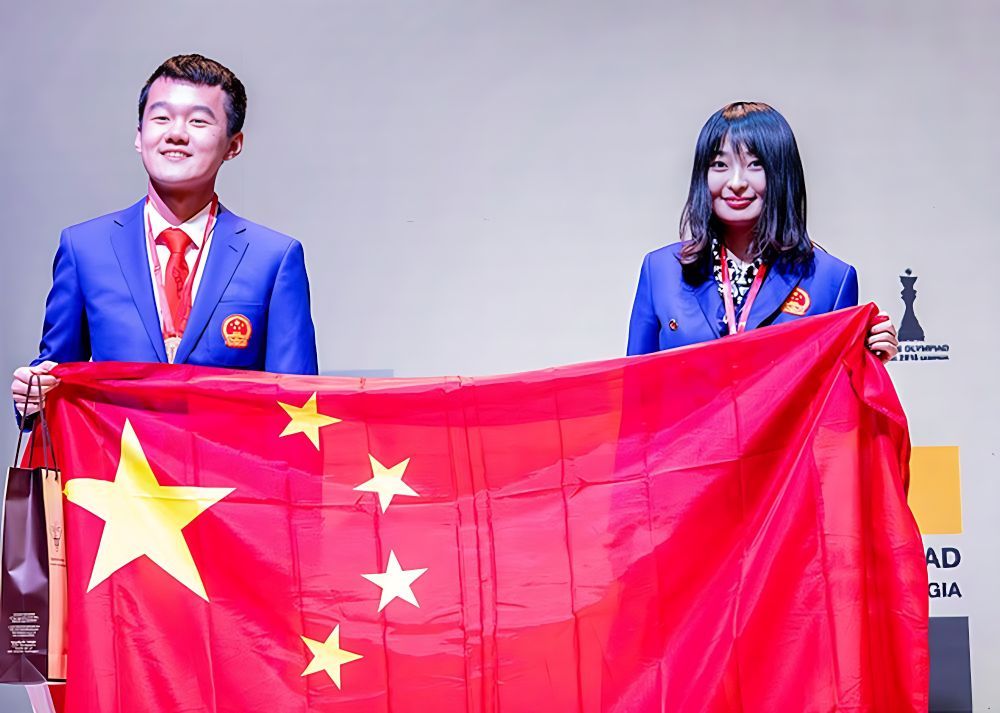

In the rapid they took gold on tiebreaks ahead of Team MGD1 and Hexamind in a three-way photo finish. In the blitz they beat Hans Niemann's Endgame.AI in the final, ending WR Chess's two-year reign as blitz champions. "We prepared for a long time and played as a family; we are a family," said captain Ni Hua afterwards. It showed.
7. The last-day transformation: cheerleaders, lights and a big screen
This is where Hong Kong did something I have honestly never seen at a chess event before. For the final day of the blitz - the knockout stages, with the medals on the line - the organisers restructured the venue to put the spectator experience front and centre. They brought in cheerleaders. They added stage lighting and a giant screen so the audience could follow the critical boards in real time. The whole arena was reconfigured to feel less like a quiet tournament hall and more like a live sporting final.

I know this will divide opinion among chess purists, and that is exactly why I find it so interesting. Chess is searching for ways to package itself as entertainment without losing its soul, and Hong Kong was bold enough to actually experiment. Some ideas will stick, others may not - but the willingness to try, to treat the people who came to watch as guests at a show rather than as bystanders, is precisely the kind of forward thinking the chess world needs more of.


8. Test your tactics from Hong Kong
Of course, no celebration of an event is complete without rolling up our sleeves and solving some chess. The fast time controls in Hong Kong produced a treasure trove of tactical moments - brilliant shots, missed wins, and the kind of combinations that only emerge when the clock is screaming.
We have put together a playlist of the best tactics from the event on ChessRanga. Grab a board, test yourself against the positions our stars faced, and see how many you can crack.
9. The growing army of Indian teams
It is impossible to attend an event like this and not feel a swell of pride at how deeply India is now woven into the fabric of world chess.
Start with Team MGD1 - the defending rapid champions, fielding Arjun Erigaisi, Nihal Sarin, Pranav Venkatesh, Leon Luke Mendonca and Harika Dronavalli. They came within a whisker of retaining their crown, finishing joint-top on match points in the rapid before losing gold to Dragon Chilling on tiebreaks, then reaching the blitz quarterfinals.

Then there is Chessgurukul, the squad built around the Chennai training culture of R.B. Ramesh, weaponising the brother-sister pair of Praggnanandhaa and Vaishali alongside Aravindh Chithambaram, Karthikeyan Murali and Pranesh M.

And it does not stop with the headline names. Outfits like Chess Thullir and others flew the Indian flag further down the field - a reminder that Indian chess is now broad as well as deep. From the very top of the standings to the grassroots teams cutting their teeth on the world stage, the Indian presence in Hong Kong was everywhere. Anand, Humpy, Harika, Vaishali, Nihal, Vidit, Arjun, Pragg - across rival squads, Indians were at the centre of almost every important story of the week.
10. Geoffrey Kao, KK Chan and the future of chess in Hong Kong
Finally, the people who made all of this possible - and what it means for the future. None of this happens without vision and hard work behind the scenes, and the Hong Kong China Chess Federation deserves enormous credit. Geoffrey Kao, Honorary President of the federation, captured the ambition perfectly at the closing ceremony: "We proved that Hong Kong is not just a hub of finance and commerce. We are also a stage of international chess."

That sentence is worth sitting with. Hong Kong did not host this event because it already had a chess culture to show off - it hosted it to build one. As federation president K.K. Chan put it, "You do not wait until you have champions before you host a world event. You host a world event so your young players can see champions with their own eyes. That is how champions are made." Six local Hong Kong teams competed, thousands of local fans and schoolchildren passed through the doors, and an entire city got a front-row seat to world-class chess.
Vishy Anand, speaking as FIDE Deputy President, summed it up: "Hong Kong did not simply host the event - it embraced it, lifted it, and gave it a stage worthy of the world's best players. Chess does not belong only to the elite. It belongs to clubs, schools, families, local communities and every player who loves the game."
If this is the beginning of Hong Kong's chess journey, the future looks very bright indeed. Thank you, Hong Kong, for a championship none of us will forget.