
The seeds of an idea
In 2017, three experiences began to change how I thought about chess performance.
In January, I travelled to Wijk aan Zee as Grandmaster Adhiban’s second while I was still an active player myself. Around May or June, my mentor Srikanth suggested I read about the basketball coach John Wooden. In June, I started training Gukesh.

I didn’t see a connection between these experiences at the time. Over the years, as I continued coaching, I began to understand them differently.
An assumption about performance
When I went to Wijk aan Zee with Adhiban, I understood performance largely through chess knowledge and skill. Better preparation, stronger calculation and better decisions should, in general, lead to better results.
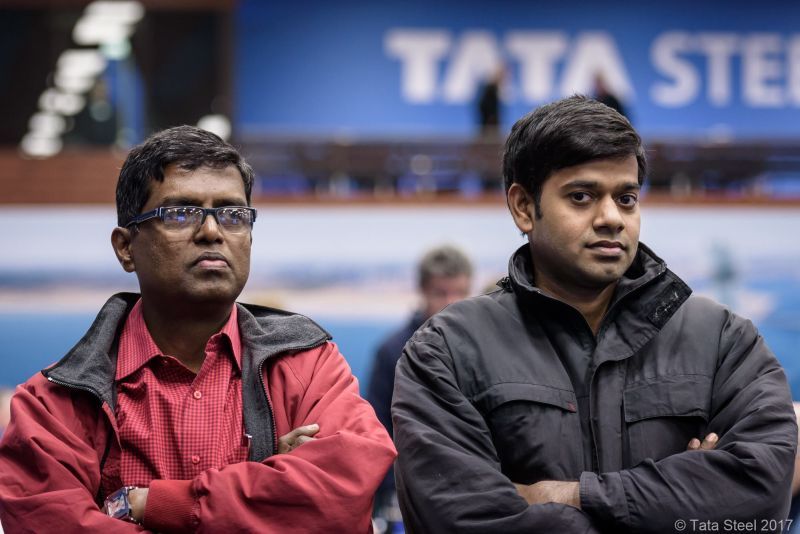
As his second, I spent my time studying opponents, analysing openings and trying to anticipate what might happen in the following day’s game.
Adhiban entered the tournament as the lowest-rated player in a formidable field. He eventually finished tied for third with 7.5/13, having played the King’s Gambit against Wesley So and the Scandinavian against Magnus Carlsen both almost never used at the elite level.
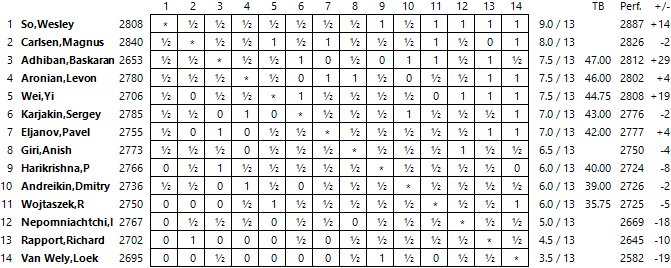


I remember one incident in particular.
Adhiban lost to Pavel Eljanov in the fourth round. His next opponent, after the rest day, was Sergey Karjakin, who had challenged Carlsen for the World Championship just a couple of months earlier.
Karjakin was among the best-prepared players in the world, and Adhiban decided to play the French Defence against him.

He had never played the opening before. He spent the rest day preparing it and went on to win the game with Black.

I remember his enthusiasm for the idea. He seemed comfortable taking on a new challenge against an opponent who had spent years preparing at the highest level.
I was familiar with the importance of preparation, opening knowledge and experience. I would have expected a player in those circumstances to rely on something he knew well, particularly after a loss. Adhiban was willing to explore an opening he had never played, and he seemed to enjoy the prospect.
The decision could have gone badly. I wouldn’t argue that playing an unfamiliar opening is inherently better than playing a familiar one. Yet his attitude throughout the tournament interested me.
I had been thinking about performance mainly in terms of what a player knew and how accurately he could use that knowledge. Adhiban made me wonder whether I was overlooking something.
I didn’t have an explanation for it in January 2017.
John Wooden and the condition for performance

A few months later, my mentor Srikanth suggested I read about John Wooden, the legendary basketball coach at UCLA.
I came across a story about how Wooden began each season by teaching his players to put on their socks and shoes correctly.
These were elite basketball players. Some would have found the exercise unnecessary. Wooden explained that a wrinkle in a sock could cause a blister, and a blister could interfere with a player’s ability to move and train.
He took the time to teach something that his players had done since childhood because he considered it important to their performance.
I initially understood the story as an example of attention to detail. Over time, another aspect of it began to interest me.
Basketball players perform through physical movement. Wooden was taking care of a basic physical condition that could interfere with their performance.
Chess players spend hours sitting almost motionless. Most of our activity is mental. We observe, remember, calculate, imagine, evaluate and decide.
I began wondering about the equivalent for a chess player.
A player could have excellent opening preparation, calculation ability and positional understanding. Yet there are days when he struggles to use those abilities. Even within a single game, the quality of his thinking can change considerably.
We often describe these differences through concentration, confidence or form. I wanted to understand the mental conditions in which a player could make the best use of his abilities.
Wooden’s story gave me a way to think about this. His players already knew how to play basketball. He was attending to something that might prevent them from playing as well as they could.
I wondered how much of chess performance involved similar interference.
Expertise and familiarity
In June 2017, I started training Gukesh.
Working with a player over several years offers a perspective that is difficult to develop through individual tournaments. You observe how the player approaches training, responds to losses, deals with familiar problems and behaves when there is no immediate reward for his effort.
One quality in Gukesh stood out to me: his appetite for chess.
He approached games with a high level of attention irrespective of their stakes. He wanted to fight in every game.
I found this remarkable because competitive players have many reasons to value one game more than another. A tournament-deciding game demands attention because of its consequences. A game against a much weaker opponent, or one played after a disappointing tournament, may carry little immediate significance.
Gukesh’s willingness to engage with the game was remarkably consistent.
I don’t mean he played every game perfectly or maintained the same concentration at every moment. I was interested in his desire to fight, even when the external circumstances offered little additional motivation.

As I watched his chess develop, I began thinking about what happens to this quality as players become experienced.
A young player encounters unfamiliar positions almost every day. There are new openings to learn, new ideas to discover and new problems to solve. The game offers an enormous amount of novelty.
Experience gradually changes this.
After thousands of games, a player has seen similar structures, calculated similar variations and faced similar practical decisions. Tournament routines become familiar. The experience of winning and losing becomes familiar too.
But familiarity can also influence curiosity.
I became interested in the ability to retain curiosity despite possessing extensive knowledge.
In some ways, the expert has more reasons to be curious than the beginner. The beginner is interested because almost everything is unfamiliar. The expert can recognise when something contradicts his understanding, and investigate why.
Experience need not diminish curiosity. It can make curiosity more sophisticated.
Yet I have also seen how easily experienced players begin to rely on what they already know. They can become ambitious and disciplined while losing some interest in exploring unfamiliar ideas.
I increasingly wanted to pay attention to this in my coaching.
The appetite for struggle
Chess players spend a great deal of time trying to reduce uncertainty. We prepare openings, study opponents, analyse previous games and anticipate possible developments.
Preparation helps us enter a game with some understanding of the problems we may encounter.
Yet at some point, the opponent plays something unexpected. Our preparation ends, our evaluation turns out to be wrong, or we reach a position we would have preferred to avoid.
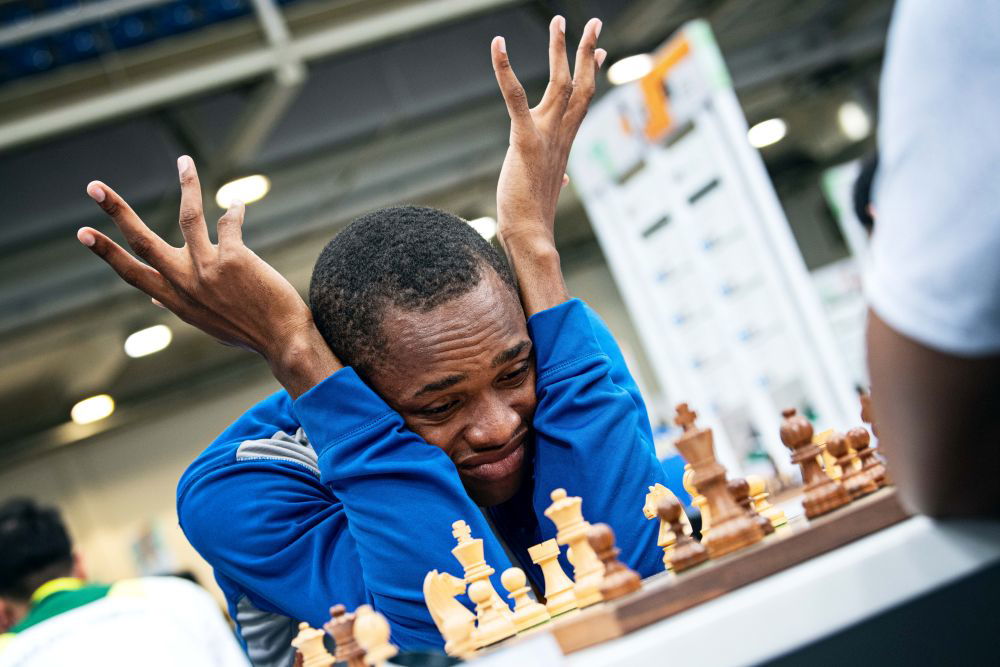
We have to begin solving problems for which we have no prepared answer.I became interested in how players respond to these moments.A player may want to win very badly and still find the process of playing difficult to embrace.I think there is a distinction between wanting to win and wanting to engage with the contest.
Competitive ambition gives a player a reason to work hard. It can sustain years of disciplined training. But it doesn’t guarantee an interest in the problems encountered along the way.
The appetite for struggle is an interest in engaging with chess despite the uncertainty involved.
It doesn’t require players to enjoy losing or to seek out difficulties unnecessarily. It describes a willingness to stay involved when the game becomes uncomfortable.
In Adhiban, I had observed enthusiasm for entering an unfamiliar situation against an exceptionally strong opponent. In Gukesh, I saw a willingness to fight in each game regardless of its stakes.
These experiences made me pay greater attention to the player’s relationship with the activity itself.
Relationship between curiosity and attention
We usually discuss concentration as something that requires effort. Players must avoid distractions, resist impulsive decisions and maintain attention for several hours. These abilities are important, particularly when a game becomes tiring. But we also experience attention differently when something interests us.
I have increasingly thought about this in relation to flow. Flow is often understood through the relationship between challenge and skill. The task must be demanding enough to engage our abilities while remaining within our capacity to handle it.
I wonder whether curiosity deserves more attention in this discussion.
A player may possess the skill required to solve a problem without having much desire to engage with it. Another may find the problem so interesting that sustained attention comes with relatively little effort.
Curiosity cannot replace skill or discipline. Players must also learn to concentrate when they are tired, frustrated or uninterested. Still, I think curiosity can make attention feel less like something we impose upon ourselves.

This brings me back to the idea of the expert with a beginner’s enthusiasm. The beginner is often enthusiastic because he doesn’t yet know how difficult the game is. Much of chess remains unexplored, and the possibilities seem endless. An expert has a different relationship with difficulty. He knows how much work a position can demand. He has experienced mistakes, disappointments and the limitations of his own understanding.
To remain enthusiastic with all that experience is a quality I admire. The expert knows how difficult the struggle can be and still wants to engage with it.
What I want to preserve as a coach
Chess coaching places a great deal of emphasis on correctness.
We ask players to find the best move, calculate accurately, understand the right plan and avoid repeating mistakes. All of this is necessary for improvement. But I have become concerned about what happens when players become more interested in being correct than in discovering something.
A student may recognise a familiar pattern and stop investigating the position. He may hesitate to suggest an unusual idea because he expects it to be wrong. He may become dependent on the coach or engine to establish the correct evaluation.
Over time, training can become a process of finding approved answers.
I want players to develop the confidence to explore ideas before knowing whether they are correct. I want them to question their first evaluation, investigate an opponent’s unusual move and remain interested when their initial understanding proves inadequate.
This requires a balance. Expertise depends on learning what works, recognising patterns and developing reliable judgment. Curiosity should help a player use that knowledge more intelligently.
I also want players to retain their interest in chess as they become stronger.
A young player often has no difficulty finding something new and exciting in the game. An experienced player may need to look more carefully to find what deserves investigation.
At higher levels, the questions can become more subtle, and the answers harder to find. There is plenty left to discover.
I think a coach has a responsibility to help players continue enjoying that process of discovery.
Read the original Substack post here.


