
Aronian shares a study
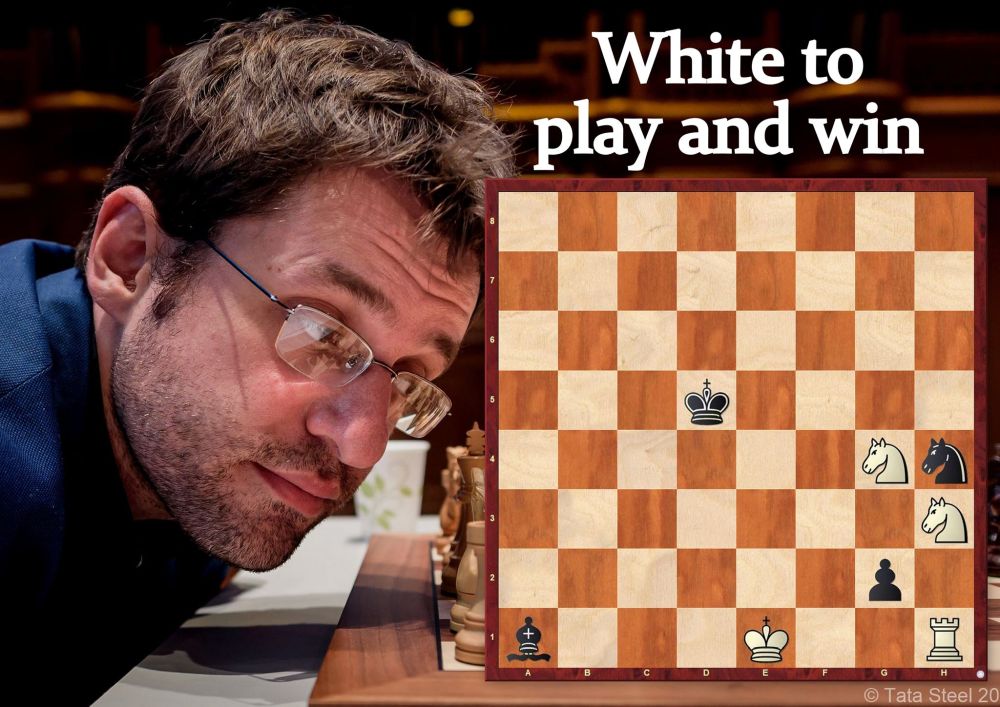
Here is the actual tweet:
White to move &win! This is one of my favorites because the idea is very theatrical and “hidden”. I’ll put the solution in the reply section. One rule is I won't mention the author, so nobody can look it up..and please, if you know it - no spoilers! #chessistheatrical pic.twitter.com/kZpJT4EdD9
— Levon Aronian (@LevAronian) May 16, 2019
This study, originally a brainchild of the great Yuri Bazlov, presents a brilliant case of what is known as a positional draw.
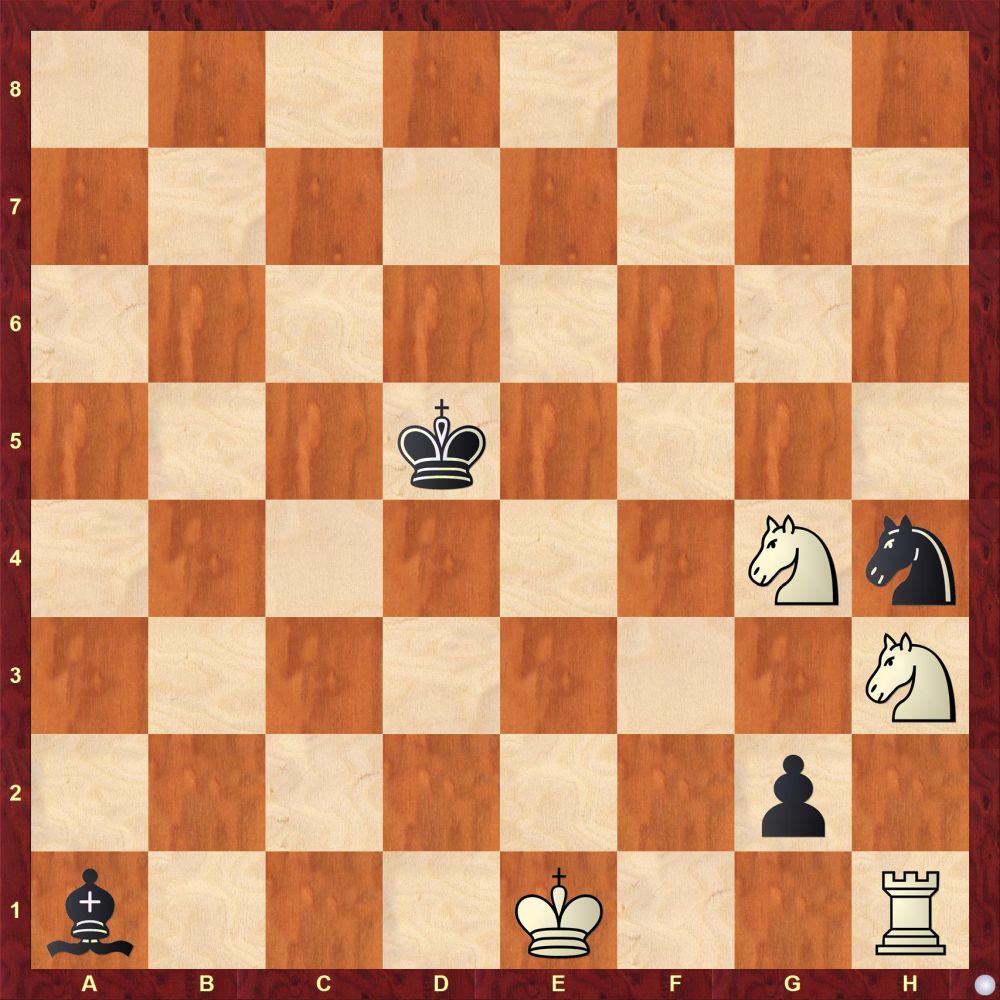
FEN: 8/8/8/3k4/6Nn/7N/6p1/b3K2R w K - 0 1
White’s rook is threatened and 1.Rg1/h2 runs into 1...Nf3+ fork. So there are only two candidate moves to look for, namely 1.Nf4+ and 1.Ne3+ At first glance they both look the same but there is a subtle difference. After 1.Nf4+?! Ke4! 2.Nxg2 Nxg2+ 3.Kf2 Ne3! 4.Nxe3 Bd4! White is a whole rook up but is he winning?
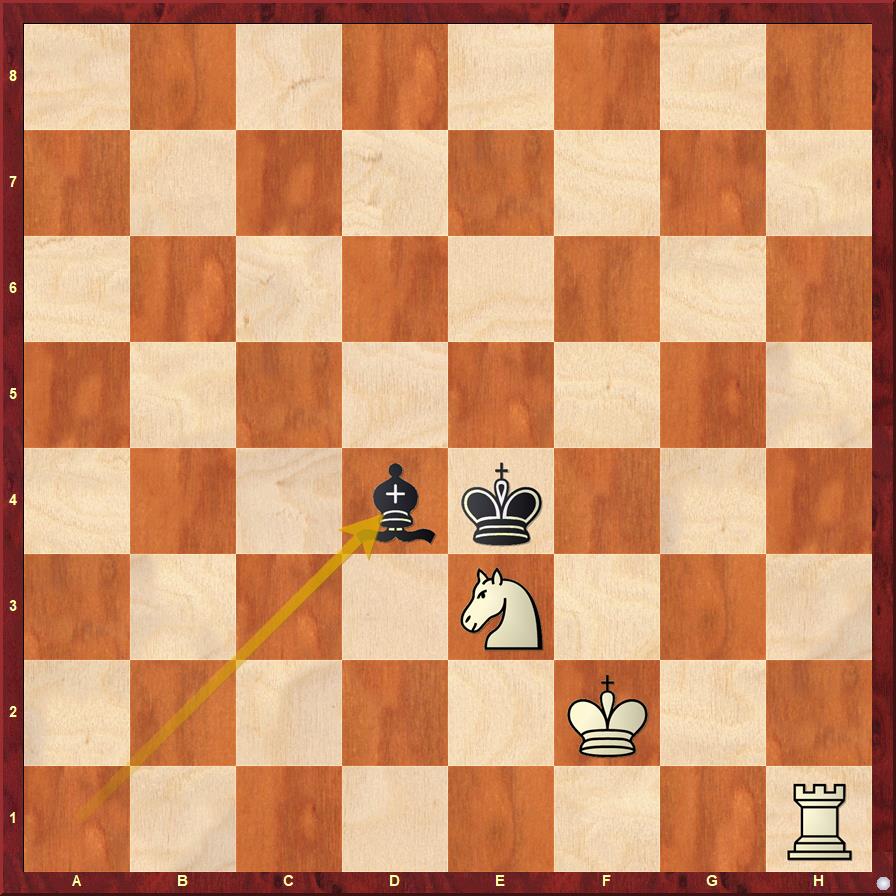
Hence, by the process of elimination, we now know that 1.Ne3+ must be the first move. 1.Ne3+! Ke4 2.Nxg2 Nxg2+ 3.Kf2 Nf4
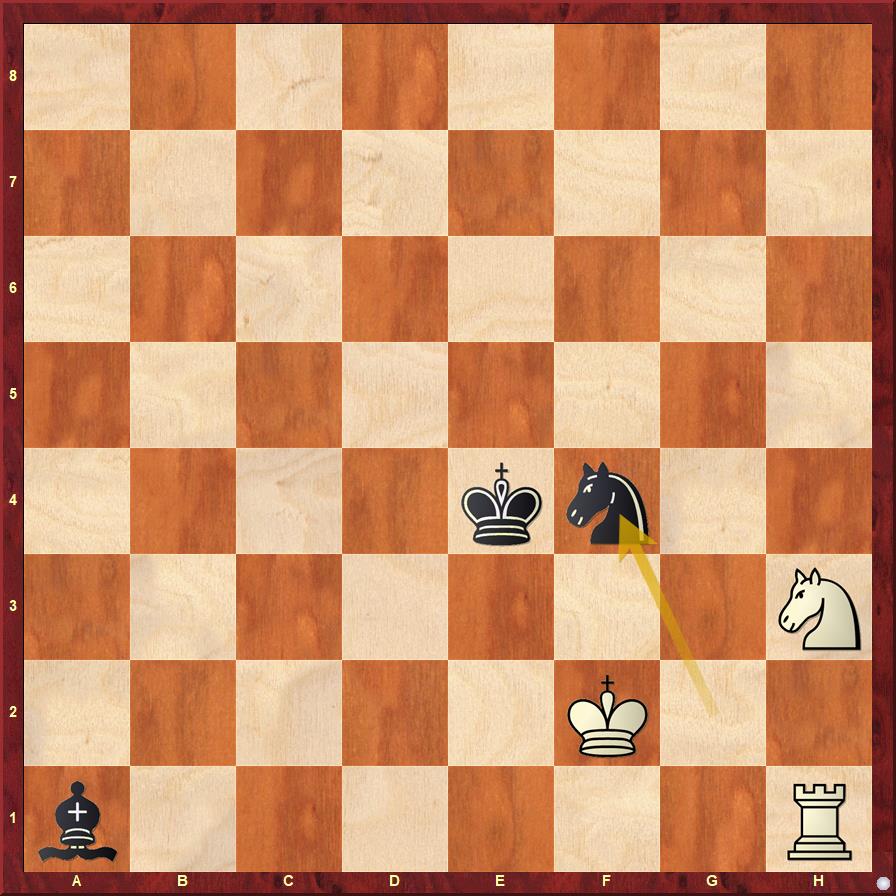
Hence in the above diagram, White must first insert a check with 4. Re1+! Kf5 5. Nxf4 Bc3!
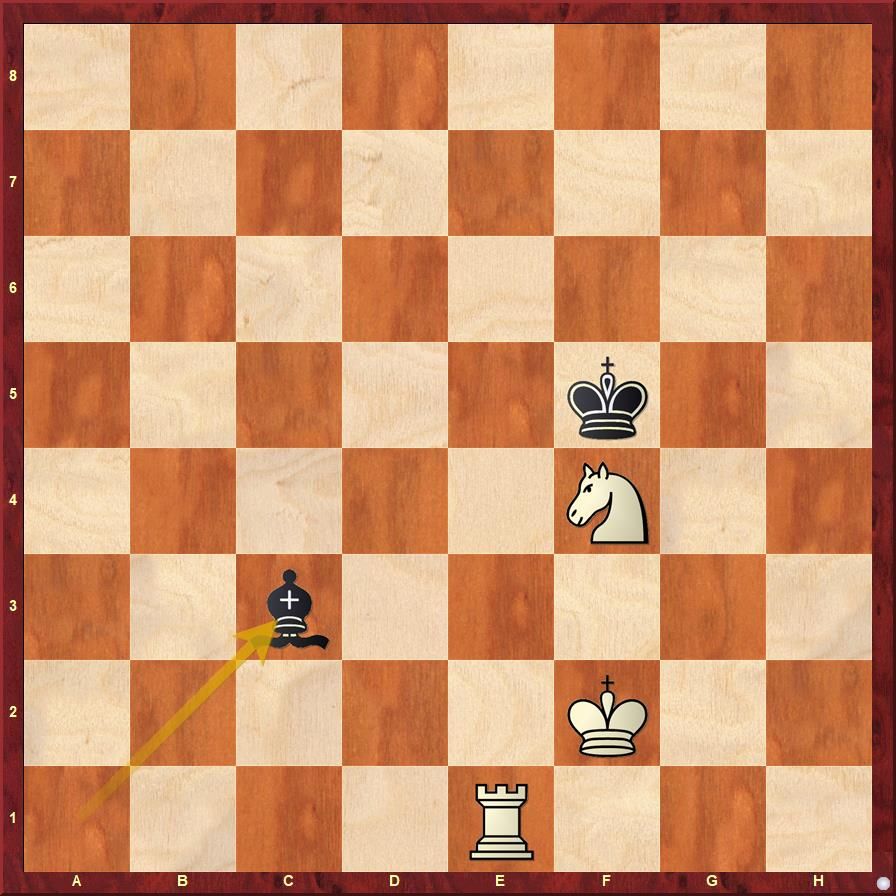
6. Rc1 Bd2 7. Rc5+! Kxf4 and finally 8. Ke2!
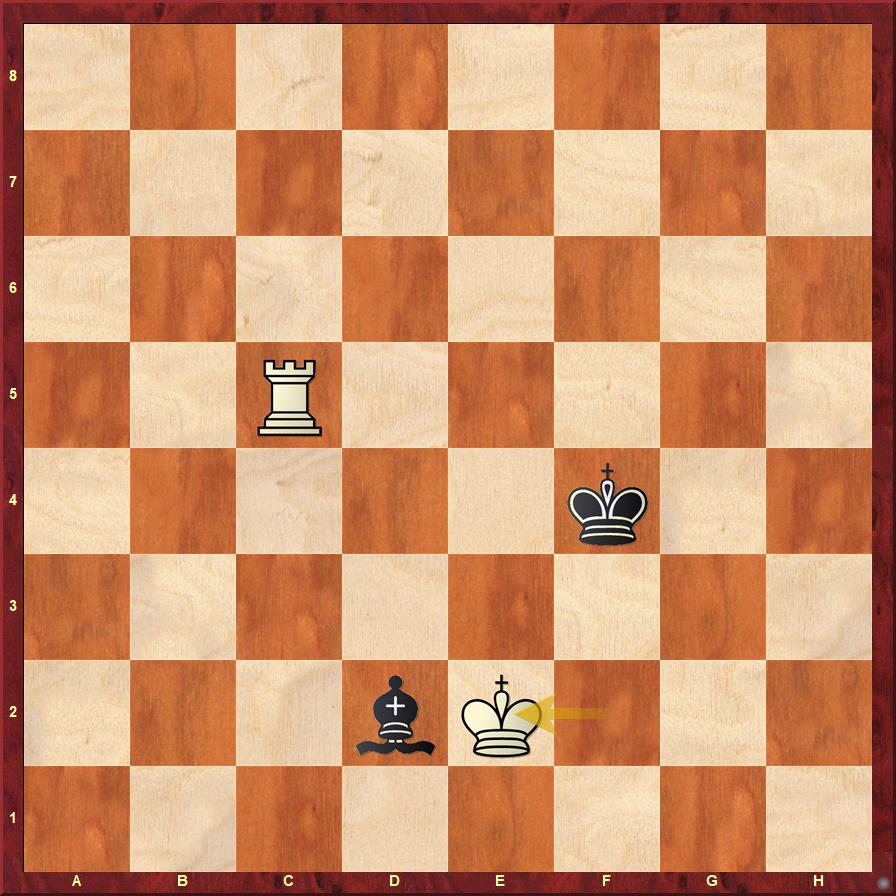
What makes this position so fascinating is the fact that in some lines White is not able to win even with a huge material superiority. This phenomenon is called a positional draw.
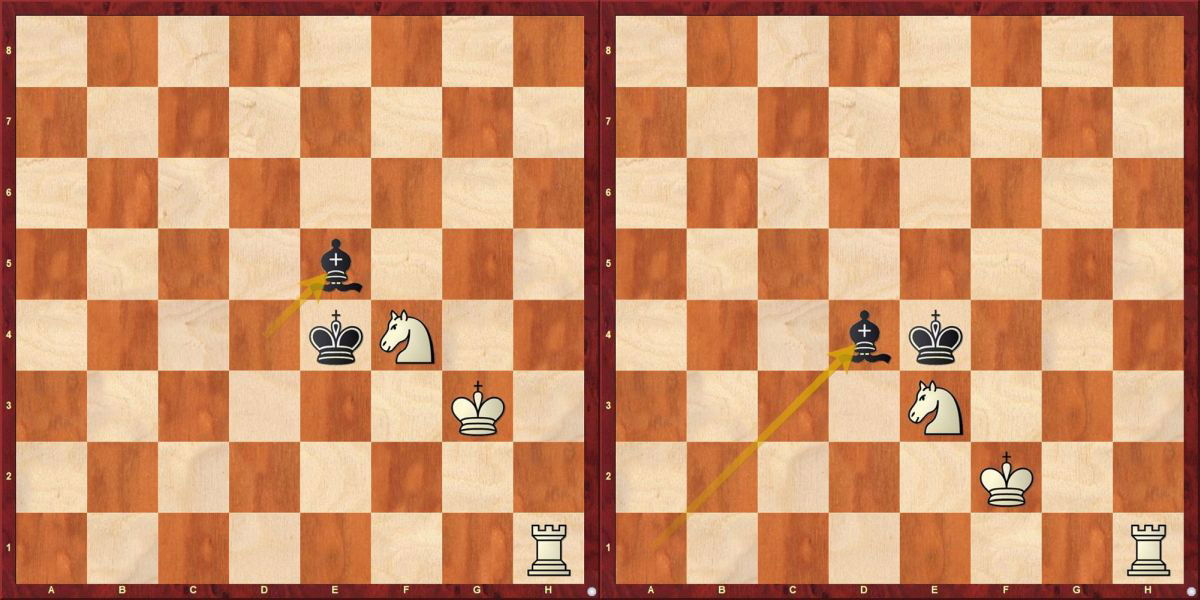
In the book “Practical Chess Beauty” Yochanan Afek defines this as follows:
"Positional draw is a general term for the draw which results when one side is unable to convert what would normally be a decisive material superiority. This may be due to various positional factors such as the vulnerability or limited mobility of pieces, perpetual attacks or... a picturesque fortress!"
Let us try to understand this unusual, counter-intuitive concept better with a few more examples:
Study 1
Kurt Wilhelm Bruno Heinrich Eucken, Tidskrift för Schack 1948, 3rd Prize
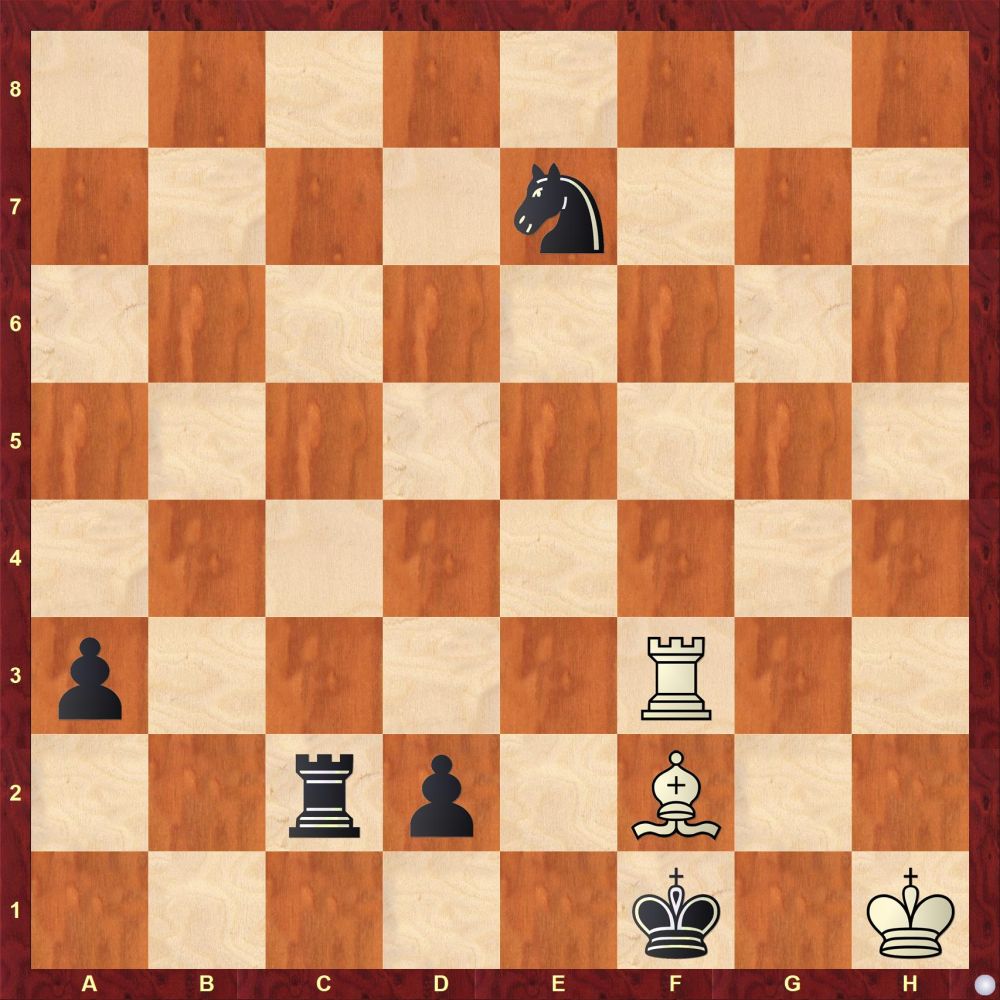
FEN: 8/4n3/8/8/8/p4R2/2rp1B2/5k1K
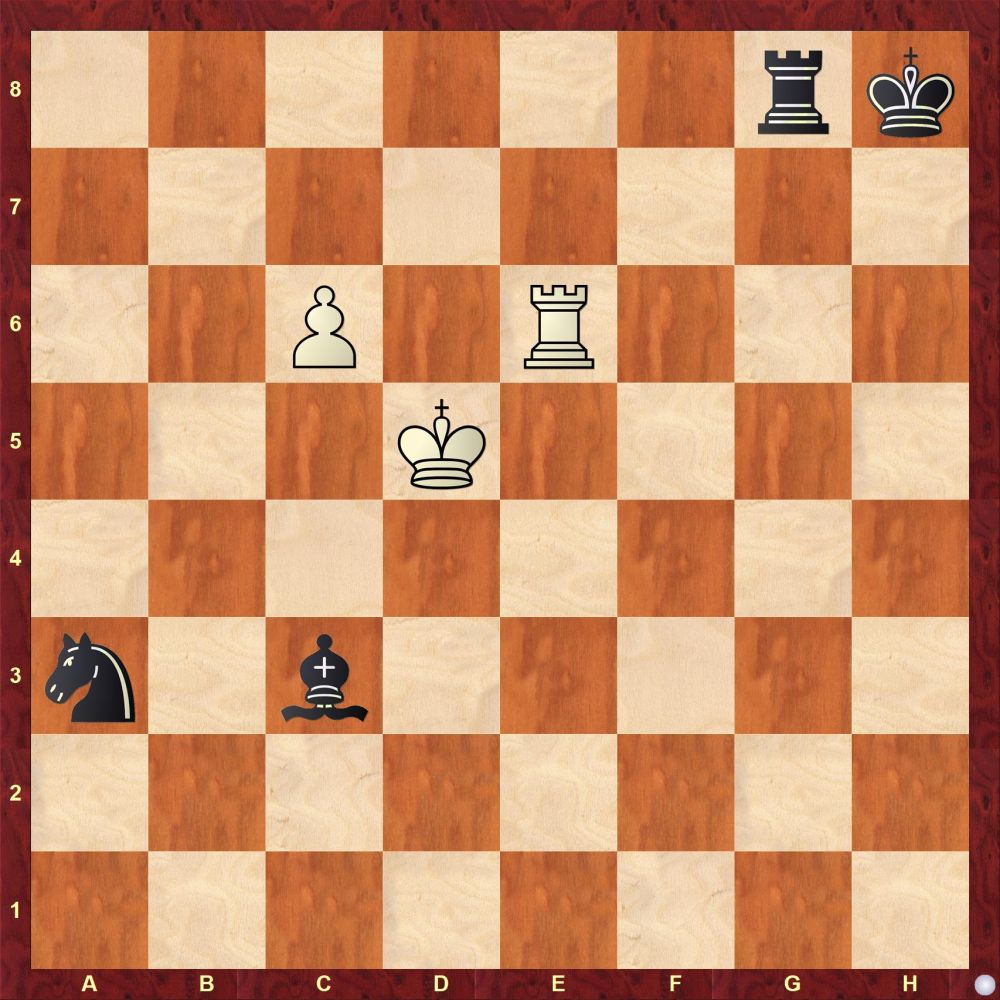
What we have next is yet another Bazlov masterpiece. This composition is truly beautiful for its richness of play.
Study 2
Yuri Bazlov, Armenian Central Chess Club Tourney 1967, 1st Prize

Study 3
D Gurgenidze, Sredba na Solidarnosta 1977, 1st Honourable Mention
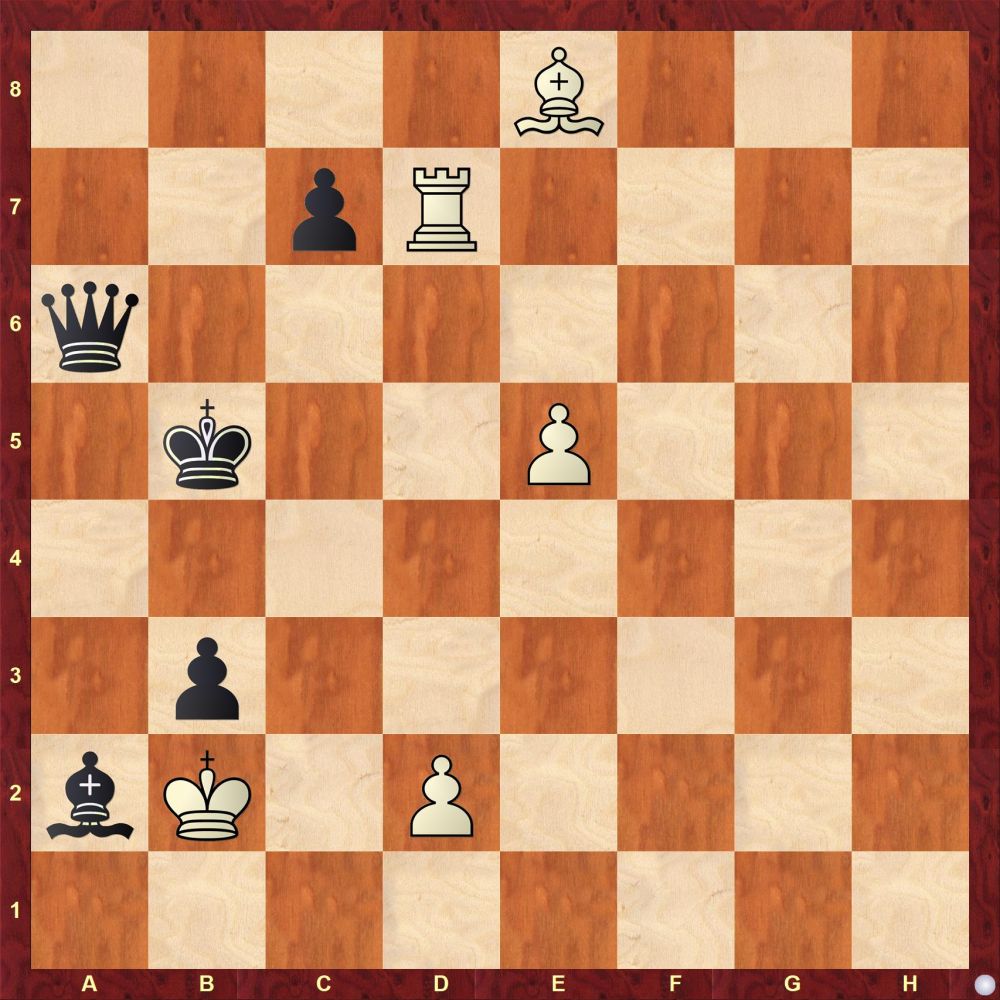
FEN: 4B3/2pR4/q7/1k2P3/8/1p6/bK1P4/8
The next one presents nice flow and shows queen domination by rook and knight.
Study 4
V Kovalenko, Diagrammes 1996, 3rd Honoroable Mention
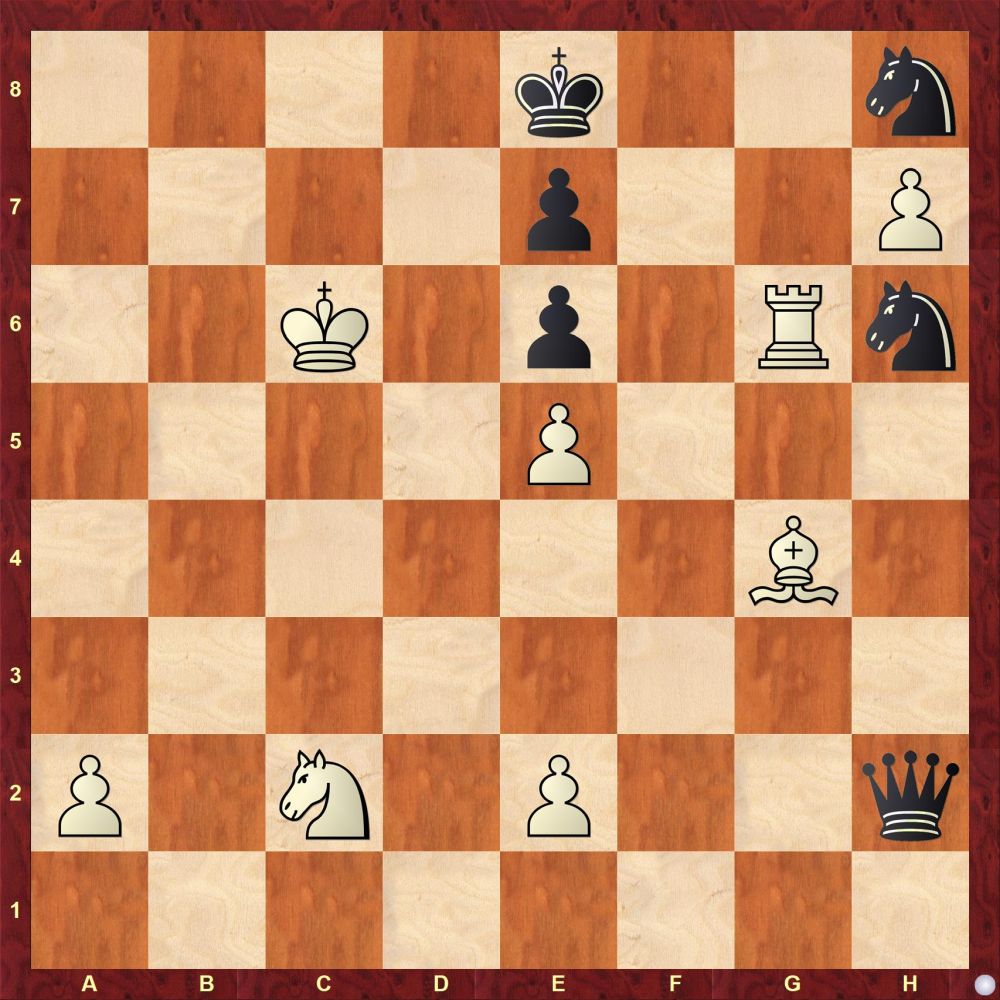
FEN: 4k2n/4p2P/2K1p1Rn/4P3/6B1/8/P1N1P2q/8
Study 5
Vitaly Halberstadt, Magyar Sakkvilág 1929, 3rd Prize
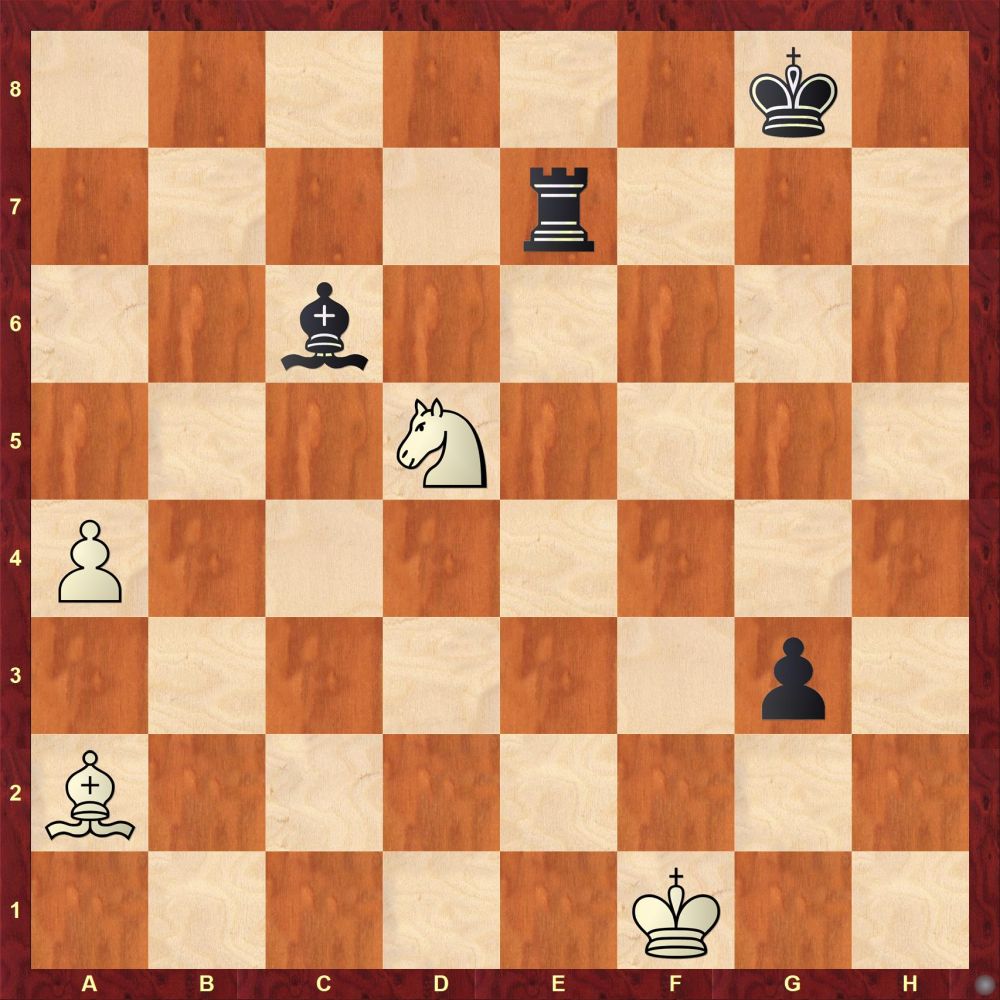
FEN: 6k1/4r3/2b5/3N4/P7/6p1/B7/5K2
Study 6
Adolph Jay Fink, The San Francisco Chronicle, 1921
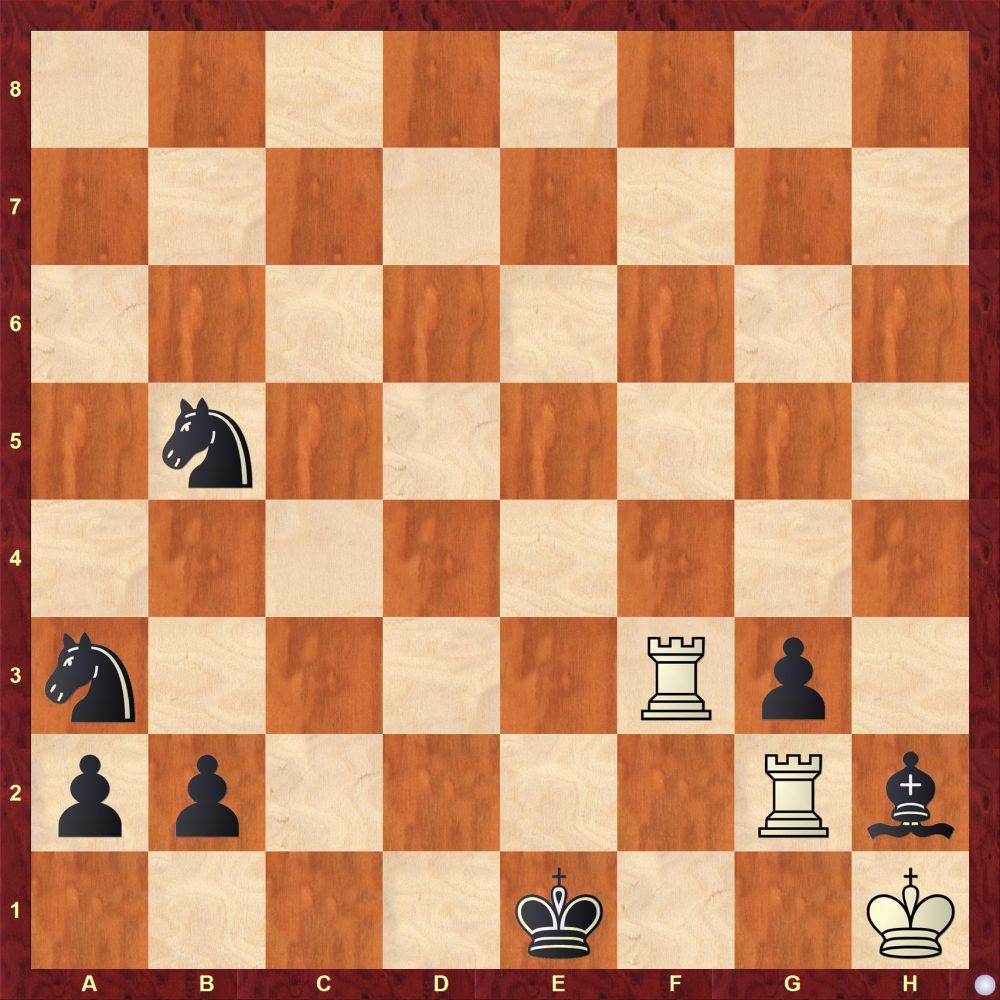
FEN: 8/8/8/1n6/8/n4Rp1/pp4Rb/4k2K
We end this article by looking at two simple examples of fortress making.
Study 7
Froim Markovich Simkhovich, Turkmenskaya Iskra 1926, 1st Prize
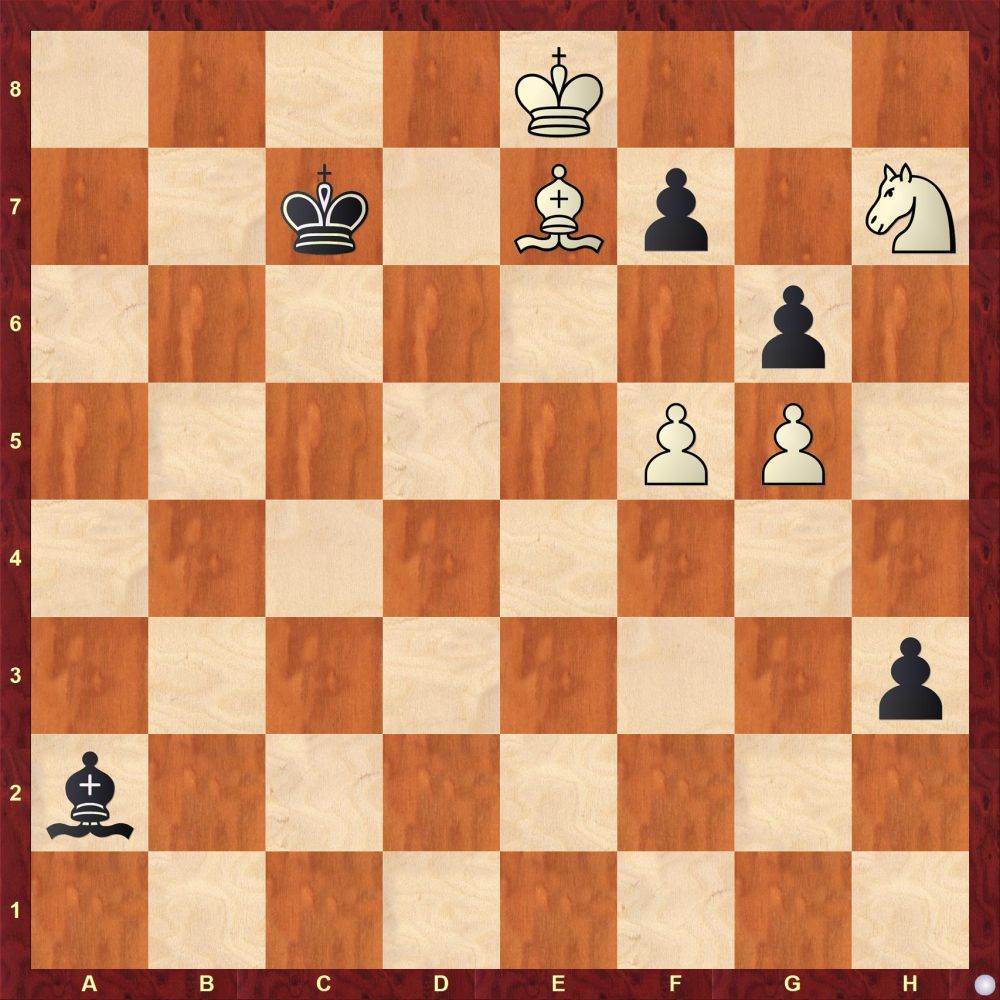
FEN: 4K3/2k1Bp1N/6p1/5PP1/8/7p/b7/8
Study 8
W. Rudolph, The Chess Amateur, 1912
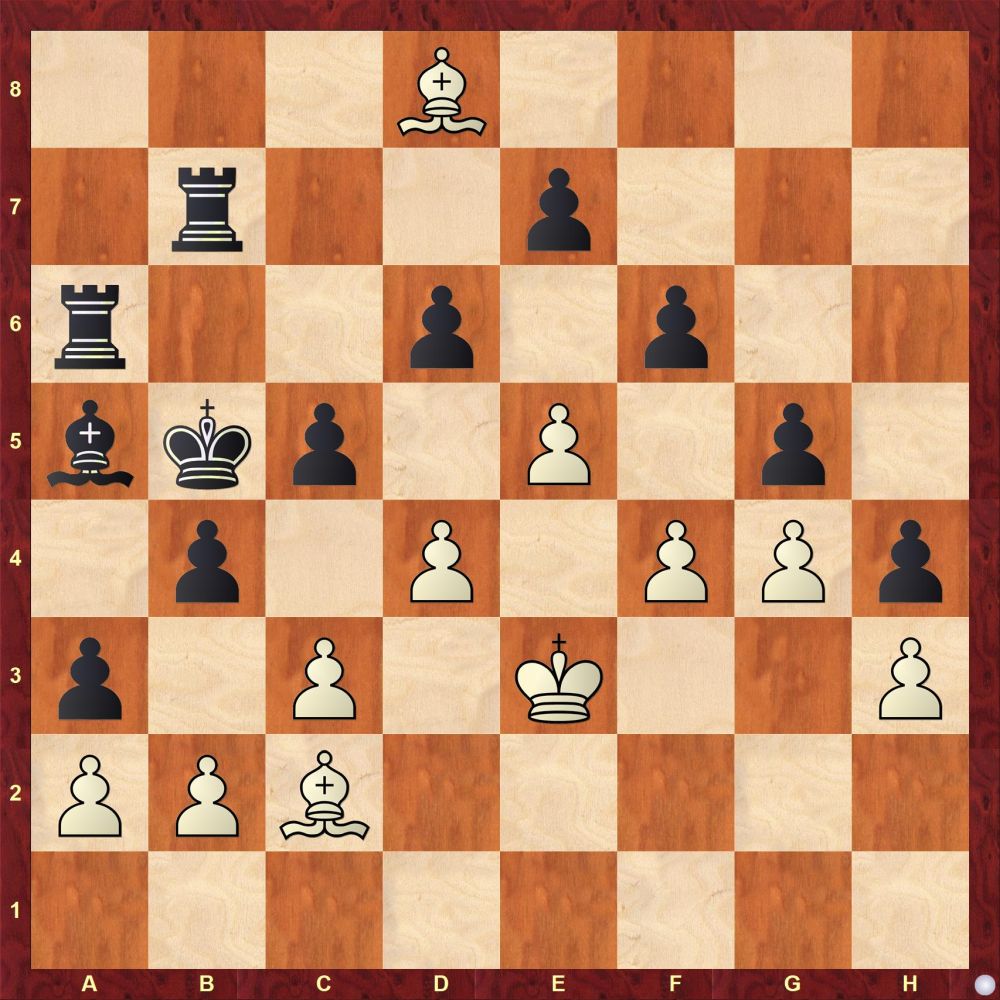
FEN: 3B4/1r2p3/r2p1p2/bkp1P1p1/1p1P1PPp/p1P1K2P/PPB5/8
About the author

Satanick Mukhuty has a background in Mathematics. He is an avid enthusiast of composition chess and is sincerely committed to promoting it around the world.


